
SMART VOICE FOLLOW-UP. Send Personalised Voice Messages Directly to Voicemail — Without the Phone Ringing
Imagine being able to leave a personalised voice message for a customer without calling them and without their phone ever ringing.
Smart Voice Follow-Up makes that possible.
Your personalised AI-generated voice message is delivered directly to the customer's voicemail — automatically.
There's no call for them to answer and nobody on your team needs to make the call.
NO RINGING. NO MANUAL CALLING. JUST YOUR MESSAGE DELIVERED DIRECTLY TO THEIR VOICEMAIL.
Leave the Voice Message — Without Making the Call
Think about how many times your business needs to contact a customer simply to remind, follow up or pass on a message.
Normally, someone has to pick up the phone, make the call and hope the customer answers.
If they don't, your team may end up leaving a voicemail anyway.
Smart Voice Follow-Up removes the manual call from that process.
A personalised AI-generated voice message is delivered directly to the customer's voicemail.
Their phone doesn't ring.
They don't have to answer.
And nobody on your team has to make the call.
The customer simply receives the voicemail and can listen to the message when it suits them.
That makes it particularly useful for communications that don't necessarily require a live phone conversation — such as reminders, follow-ups, notifications and invitations.
And because the process can be automated, your team doesn't have to work through a calling list every time those messages need to go out.
THEIR PHONE DOESN'T RING. YOUR TEAM DOESN'T MAKE THE CALL. THE MESSAGE GOES DIRECTLY TO VOICEMAIL.
One Simple Service. Many Ways to Use It.
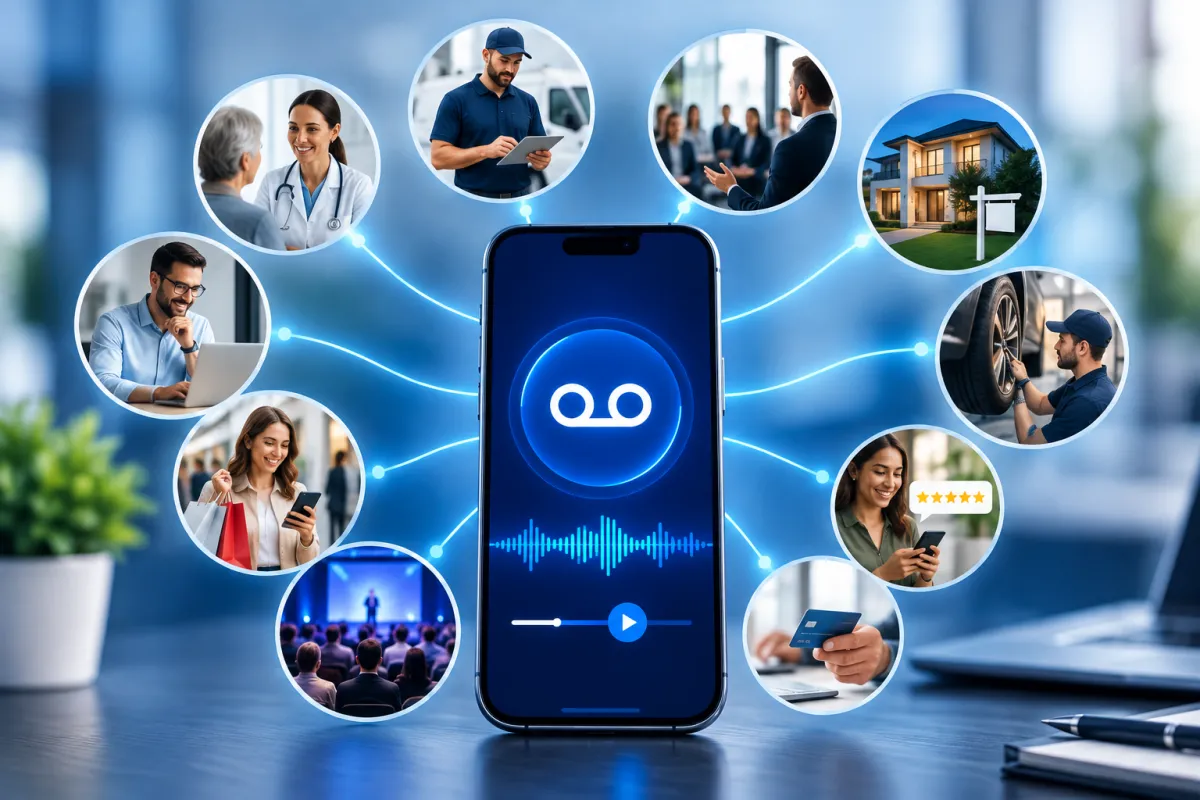
Smart Voice Follow-Up isn't limited to sales calls or one particular type of business.
If your business regularly needs to remind, follow up or reconnect with people, there may be a practical use for direct-to-voicemail messaging.
Appointment Reminders
Send customers a personalised voice reminder before their appointment — without someone on your team calling each person.
Quote Follow-Ups
Follow up after a quote has been sent and give the prospect another opportunity to respond.
Webinar Reminders
Remind registered attendees that an upcoming webinar is approaching.
Open Homes & Property Inspections
Send viewing and inspection reminders directly to registered prospects.
Service Reminders
Remind customers about upcoming servicing, maintenance or other scheduled work.
Customer Surveys
Invite customers to provide feedback after using your service.
Database Reactivation
Add a personalised voice touchpoint when reconnecting with older leads or previous customers.
Sales Promotions
Let customers know about a relevant promotion, offer or upcoming opportunity.
Event Reminders
Remind registered attendees before an event takes place.
Payment Reminders
Send a friendly voice reminder when an invoice or payment requires attention.
The business doesn't need to use every one of these.
Start with the communication your team is already doing manually — and identify where direct-to-voicemail messaging could make it easier.
ONE VOICE MESSAGING SERVICE. MULTIPLE WAYS TO REMIND, FOLLOW UP AND RECONNECT.
Add Voice to the Communication You Already Use

Smart Voice Follow-Up doesn't require you to replace the systems or communication methods your business already uses.
It can simply become another way to reach your customers.
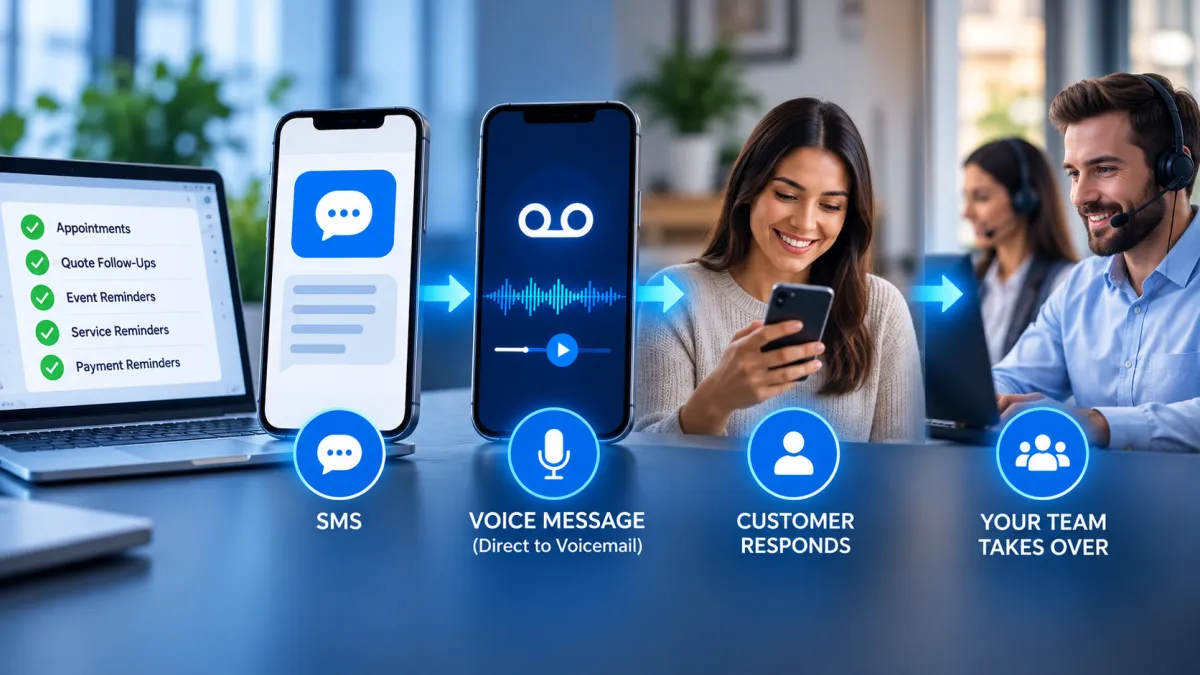
For example, you may already send an SMS when:
→An appointment is approaching
→ A quote needs following up
→An event or webinar is coming up
→A service is due
→A payment needs attention
Smart Voice Follow-Up can add a personalised voice message to that process.
So instead of relying on one communication method, a follow-up could look like:
SMS → Direct-to-Voicemail Voice Message → Customer Responds → Your Team Takes Over
Your source material specifically describes voice messaging as something that can be layered alongside existing SMS communication.
But you don't have to use SMS.
Smart Voice Follow-Up can also work as a standalone voice messaging service when that's all your business needs.
That means you can start simply.
Choose one use case. Set up the message and process. Then use it whenever that particular follow-up needs to happen.
If you later find other areas where voice messaging could help, the service can be expanded to support those as well.
YOU DON'T NEED TO CHANGE EVERYTHING. START WITH ONE USE CASE AND BUILD FROM THERE.
A Simple Way to Add Voice Without Adding More Work
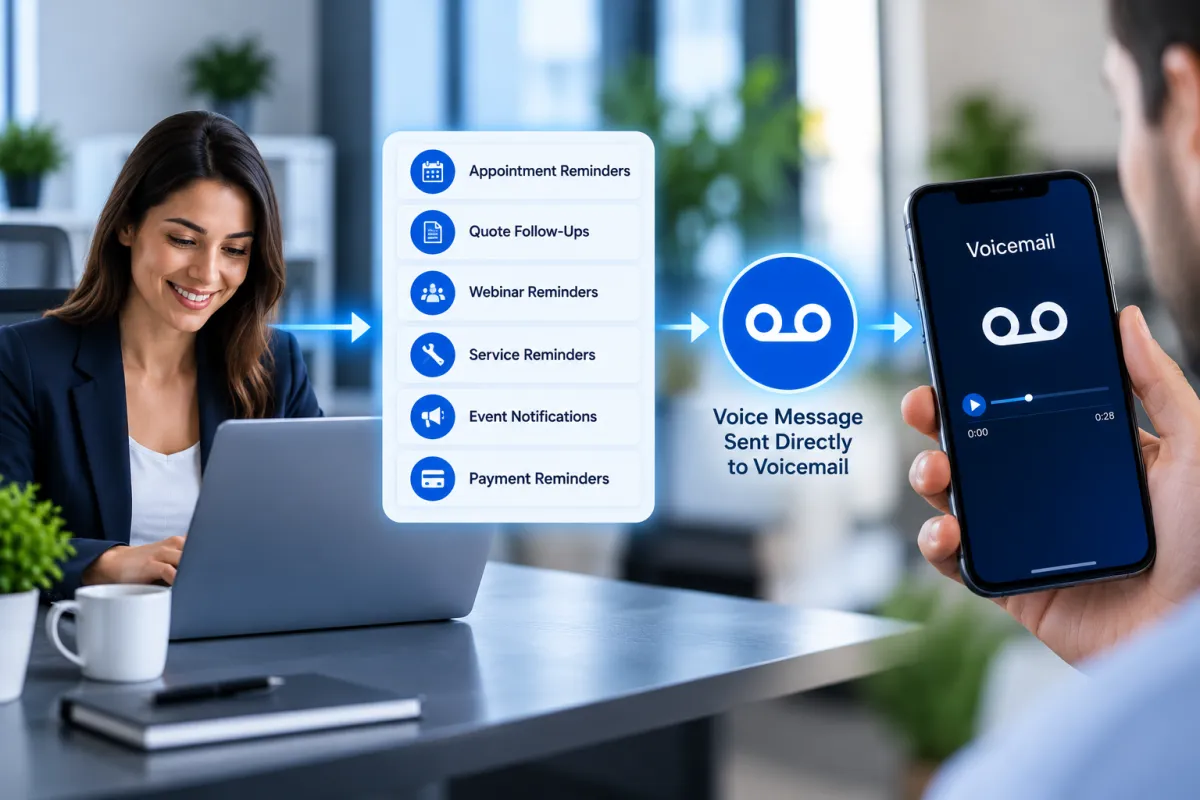
Introducing a new system into a business can sometimes sound complicated.
Smart Voice Follow-Up doesn't need to be.
You can start with one repetitive communication task your team is already handling.
For example, perhaps your team regularly calls customers to remind them about tomorrow's appointments.
Instead of making those calls manually, Smart Voice Follow-Up can deliver the prepared voice message directly to each customer's voicemail — without their phone ringing.
The same principle can be applied to quotes, inspections, webinars, service reminders, events and other recurring communications.
Once the message, timing and process are set up, delivery can happen automatically.
That means your team can spend less time making repetitive calls while still giving customers the more personal experience of receiving a voice message.
And you don't need to implement a full conversational AI system to use it.
The underlying service is specifically suited to situations where a short voice message makes more sense than a full AI call or ongoing conversation.
START WITH ONE REPETITIVE CALLING TASK. LET SMART VOICE FOLLOW-UP HANDLE THE MESSAGE DELIVERY.
Ready to See Smart Voice Follow-Up in Action?
Sometimes the easiest way to understand Smart Voice Follow-Up is simply to hear it for yourself.
We can show you how a personalised voice message can be delivered directly to voicemail — without the phone ringing and without anyone making the call.
Then we can look at where it could fit into your business.
Perhaps it's:
Appointment reminders
Quote follow-ups
Service reminders
Webinar or event reminders
Property inspections
Database reactivation
Payment reminders
Or another repetitive communication your team currently handles manually
You don't need to change your entire system.
Start with one use case and see how it works.
NO RINGING. NO MANUAL CALLING. JUST YOUR MESSAGE DELIVERED DIRECTLY TO VOICEMAIL.
❓ Won't following up on old leads feel pushy or damage our brand?
Answer: Not when it's done properly.
Our approach is designed to restart a conversation — not pressure someone into buying. Messaging is written to feel natural, relevant and consistent with your business, giving the prospect an easy opportunity to respond if they're still interested.
If they're not interested, that's respected. The goal is simply to identify the people who are open to having another conversation and bring those opportunities back to your team.
Your brand and customer experience always come first.
❓How quickly will we see results?
Answer: Results can vary depending on the type of follow-up, the quality of your existing leads, your offer and how quickly prospects respond.
Speed-to-Lead can begin engaging new enquiries as soon as the system is live, while 48-Hour Re-Capture and Database Reactivation are designed to create new conversations from opportunities that have gone quiet or been sitting in your CRM.
Some businesses may start seeing responses quickly, while others take longer. The focus is on building a consistent follow-up system that keeps opportunities moving — not promising results within a fixed timeframe.
❓ Do we need to change our CRM or existing systems?
Answer: In most cases, no.
DigiFocus is designed to work alongside your existing sales process and can integrate with many commonly used CRM and lead management systems.
We first look at the systems you're already using and determine the simplest way to connect the follow-up process without unnecessarily changing how your team works.
If you don't currently use a CRM, we can also discuss options for working with your existing lead data.
❓ Will the automated follow-up feel robotic or impersonal?
Answer: No. The goal of automation isn't to replace genuine human conversations — it's to make sure those conversations have a better chance of happening.
Your follow-up messaging is built around your business, your audience and the way you communicate.
The system handles the repetitive follow-up in the background, while interested prospects are brought back to your team when they're ready to talk.
❓ How do I know if DigiFocus is right for my business?
Answer: DigiFocus is best suited to businesses that are already generating enquiries but know some opportunities are being lost through slow, inconsistent or incomplete follow-up.
You may have new enquiries that aren't being contacted quickly enough, prospects who go quiet after the first few attempts, or older leads sitting in your CRM that haven't been revisited.
The first step is a Revenue Recovery Assessment, where we look at your current follow-up process, identify where opportunities may be slipping through the cracks, and determine whether DigiFocus is the right fit for your business.
If we don't believe there's a worthwhile opportunity to improve your follow-up, we'll tell you.

Follow Us
Helping businesses close the follow-up gaps that cost them opportunities and revenue.
The system handles the follow-up. Your team handles the conversations.
Resources:
Revenue Recovery:
Additional Solutions:


© Copyright 2026. Digi Focus. All rights reserved. HOME | Privacy Policy & Terms